A Dutch startup, Skytree, is poised to implement its innovative carbon-capture technology in a groundbreaking carbon sequestration initiative in Texas, United States. The ambitious project, named "Project Concho," is a $100 million Direct Air Capture (DAC) facility with the initial goal of extracting 30,000 metric tons of carbon dioxide from the atmosphere each year, with a long-term vision to increase this capacity to 500,000 metric tons. The captured carbon will be securely stored beneath the surface at the site. Skytree has confirmed that the facility is expected to commence operations in 2028.
Project Concho is the brainchild of Return Carbon, a Dutch carbon capture specialist, and Verified Carbon, a Texas-based partner. They intend to monetize the facility by offering carbon credits to corporations seeking to mitigate their carbon footprint. Skytree has been selected to undertake the critical task of carbon extraction. Established in 2014, Skytree's technology is inspired by the carbon scrubbers utilized on the International Space Station, which are designed to eliminate excess CO2 produced by astronauts' respiration. The company manufactures two types of machines: the Cumulus, tailored for smaller-scale applications, and the Stratus, designed for industrial-scale operations. For Project Concho, multiple units of these machines will be deployed in concert to form a single, cohesive hub.
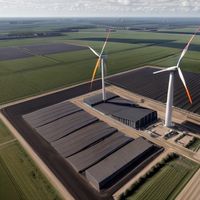
Elena Nikonova, Vice President of Skytree's newly established offices in the United States and Canada, stated, "Project Concho represents a pioneering collaboration that paves the way for even more ambitious and transformative carbon removal endeavors." The project developers plan to harness the power of an on-site wind farm, constructed by the Spanish energy company Greenalia, to operate the hub. This would position it as the world's first DAC project to be entirely powered by wind energy, according to their claims.
This collaboration between a DAC facility and a wind energy provider is a rare occurrence, yet it could set a precedent for future projects. The carbon capture plant ensures a consistent purchase of wind energy, providing the wind farm with a reliable customer base and predictable revenue streams. Conversely, the DAC plant benefits from access to low-cost, renewable energy, which is essential for reducing the high operational expenses associated with large-scale carbon capture. This mutual agreement also guarantees energy price stability and adaptability, facilitating efficient planning and growth for both parties.
Alexandre Alonso, Senior Vice President of Business Development at Greenalia, described this partnership as a "game-changer" for renewable energy initiatives. Project Concho emerges amidst a surge in carbon capture projects in the United States, fueled in part by substantial government subsidies. Recently, the Biden-Harris Administration announced intentions to allocate up to $1.8 billion in funding to bolster DAC technologies. This follows the 45Q tax credit established in the 2022 Inflation Reduction Act, which offers up to $180 per metric ton of CO2 captured and stored.
Skytree's Chief Executive Officer, Rob van Straten, remarked, "The United States continues to exhibit a burgeoning appetite for proven, cost-effective, and scalable DAC technology, driven by industry demands and supported by government initiatives."
The deployment of Skytree's technology in Project Concho signifies a significant step forward in the global fight against climate change. By leveraging the expertise of both Dutch and American partners, the project aims to not only reduce atmospheric carbon levels but also to establish a sustainable model for future carbon capture endeavors. The use of wind energy to power the DAC process is a testament to the project's commitment to sustainability and its potential to revolutionize the way we approach carbon management.
The collaboration between Skytree and Greenalia is particularly noteworthy, as it demonstrates the potential for synergistic partnerships in the renewable energy sector. By ensuring a stable demand for wind energy, the carbon capture plant can help to stabilize the market for renewable energy providers, while also securing a cost-effective source of power for its own operations. This mutually beneficial arrangement could serve as a blueprint for other carbon capture projects looking to reduce their operational costs and increase their reliance on renewable energy sources.
Project Concho's innovative approach to carbon capture and storage is a testament to the growing interest in and support for DAC technologies in the United States. With the backing of the Biden-Harris Administration and the potential for significant financial incentives through the 45Q tax credit, the project is well-positioned to make a substantial impact on the nation's efforts to combat climate change. As the project moves forward, it will be closely watched by industry stakeholders and environmental advocates alike, who are eager to see the results of this pioneering effort in carbon removal.
The successful implementation of Project Concho could have far-reaching implications for the future of carbon capture and storage. By demonstrating the viability of large-scale DAC projects powered by renewable energy, the project could inspire other countries and companies to invest in similar initiatives. This could lead to a global shift towards more sustainable and effective methods of managing carbon emissions, ultimately contributing to the global effort to mitigate the effects of climate change.
In conclusion, Project Concho represents a significant milestone in the development of carbon capture and storage technologies. With its innovative approach to harnessing wind energy and its ambitious goals for carbon sequestration, the project has the potential to set a new standard for the industry. As the world continues to grapple with the challenges of climate change, projects like Project Concho will be crucial in driving the development and adoption of cutting-edge solutions that can help to reduce greenhouse gas emissions and protect our planet for future generations.

By Sarah Davis/Dec 5, 2024

By Emily Johnson/Dec 5, 2024

By Noah Bell/Dec 5, 2024

By Sarah Davis/Dec 5, 2024

By iuno001/Nov 29, 2024

By iuno001/Nov 29, 2024

By iuno001/Nov 29, 2024
By iuno001/Nov 29, 2024
By iuno001/Nov 29, 2024

By iuno001/Nov 29, 2024

By iuno001/Nov 29, 2024

By iuno001/Nov 29, 2024

By iuno001/Nov 29, 2024

By iuno001/Nov 29, 2024

By iuno001/Nov 29, 2024

By iuno001/Nov 29, 2024

By iuno001/Nov 29, 2024

By iuno001/Nov 29, 2024
By iuno001/Nov 29, 2024

By iuno001/Nov 29, 2024