OroraTech, a Munich-based innovative enterprise, has successfully raised €25 million in funding to enhance its AI-driven wildfire detection technology. The investment round was spearheaded by Korys, the investment division of the Colruyt family, a Belgian nobility. Additionally, the European Union's Circular Bioeconomy Fund (ECBF) and Bayern Kapital, an existing investor, participated in the funding. This capital injection will be instrumental in propelling OroraTech into its next phase of expansion, with ambitions to extend its reach to international markets beyond Europe and to continually improve its proprietary technology.
OroraTech's flagship offering, the Wildfire Solution, aggregates visual data from its proprietary probes as well as more than 20 other Earth observation satellites. The company has developed an AI-driven algorithm that scans this imagery to automatically identify early signs of wildfires and even forecast their potential spread. Originating as a spin-off from the Technical University of Munich, OroraTech has launched two satellites to date, with the most recent one being deployed into low Earth orbit via a SpaceX Falcon 9 rocket in June of the previous year.
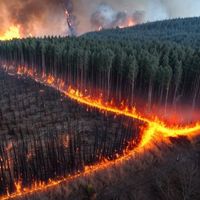
As climate change exacerbates the issue, wildfires are becoming more frequent, enduring longer, and burning with greater intensity. In the European Union alone, over 500,000 hectares of land were consumed by wildfires last year—a territory equivalent to twice the size of Luxembourg. In response to this escalating challenge, authorities are increasingly seeking out advanced technological solutions. In June, Greece's Ministry of Digital Governance awarded OroraTech a €20 million contract to develop a satellite-based early warning system for wildfires. This national defense system will comprise four thermal satellites, a network of ground sensors, and processing services. OroraTech will collaborate with the European Space Agency (ESA) and various Greek academic institutions and businesses to develop this system. The Greek national wildfire system is expected to become fully operational by 2026, once OroraTech has deployed its entire constellation of 100 compact satellites into orbit. However, the company has indicated that it will begin providing data to Greece immediately using its current thermal platform network, including the Wildfire Solution platform.
OroraTech's third satellite, FOREST-3, is set to be launched in the coming month. The company is also in the process of testing eight new thermal-imaging satellites, with plans to deploy them in early 2025. OroraTech is part of a growing trend of "firetech" startups that have emerged in recent years. For instance, Dryad Networks, a German firm, has developed an "internet of trees" sensor network capable of detecting fires in the forest before they escalate. Other initiatives include BurnBot, which has created a robot for conducting controlled burns, and Rain, a company aiming to use autonomous helicopters in firefighting efforts. In Europe, several fire departments have been testing long-range drones, such as those developed by the Dutch startup Avy, to detect wildfires at an early stage and assist firefighters on the ground in tracking the fires in real time. Researchers in Portugal are even working on a drone designed to extinguish flames from above. As the impacts of climate change continue to worsen, we can anticipate the deployment of a variety of technologies in the battle against wildfires, ultimately aiming to save lives.
With the backing of a robust financial investment, OroraTech is poised to make significant strides in the field of wildfire detection and management. The company's AI-powered system stands at the forefront of innovation, offering a comprehensive solution that not only detects wildfires but also provides critical insights into their potential trajectory. This capability is particularly valuable as the frequency and intensity of wildfires continue to rise, posing a significant threat to both human life and the environment.
The funding secured by OroraTech will enable the company to accelerate its global expansion plans, bringing its life-saving technology to regions around the world that are vulnerable to wildfires. The company's commitment to refining its technology ensures that it remains at the cutting edge of wildfire detection, providing authorities with the tools they need to respond quickly and effectively to wildfires.
OroraTech's collaboration with the European Space Agency and Greek partners on the national wildfire system is a testament to the company's ability to work with international organizations and governments to develop tailored solutions for specific needs. This partnership will not only enhance Greece's capacity to detect and manage wildfires but also serve as a model for other countries looking to implement similar systems.
The upcoming launch of FOREST-3 and the testing of new thermal-imaging satellites demonstrate OroraTech's ongoing dedication to advancing its technology and expanding its capabilities. These new satellites will further enhance the company's ability to provide real-time data on wildfires, enabling more accurate predictions and faster responses.
The emergence of "firetech" startups like OroraTech signals a shift in the approach to wildfire management, with a focus on leveraging advanced technologies to combat this growing threat. From sensor networks that detect fires before they spread to robots and drones that assist in firefighting efforts, these innovative solutions are becoming increasingly essential in the face of climate change.
As climate change continues to exacerbate the risk of wildfires, the development and deployment of advanced technologies like those offered by OroraTech will be crucial in the global effort to protect lives, property, and the environment. The company's success in securing significant funding and its commitment to innovation position it as a key player in this critical field, poised to make a significant impact in the battle against wildfires.

By Sarah Davis/Dec 5, 2024

By Emily Johnson/Dec 5, 2024

By Noah Bell/Dec 5, 2024

By Sarah Davis/Dec 5, 2024

By iuno001/Nov 29, 2024

By iuno001/Nov 29, 2024

By iuno001/Nov 29, 2024

By iuno001/Nov 29, 2024
By iuno001/Nov 29, 2024

By iuno001/Nov 29, 2024

By iuno001/Nov 29, 2024

By iuno001/Nov 29, 2024

By iuno001/Nov 29, 2024

By iuno001/Nov 29, 2024

By iuno001/Nov 29, 2024

By iuno001/Nov 29, 2024

By iuno001/Nov 29, 2024

By iuno001/Nov 29, 2024
By iuno001/Nov 29, 2024

By iuno001/Nov 29, 2024